When Conveyance Stops, Your Business Stops
What Happens When a Conveyor Fails in a Distribution Center?
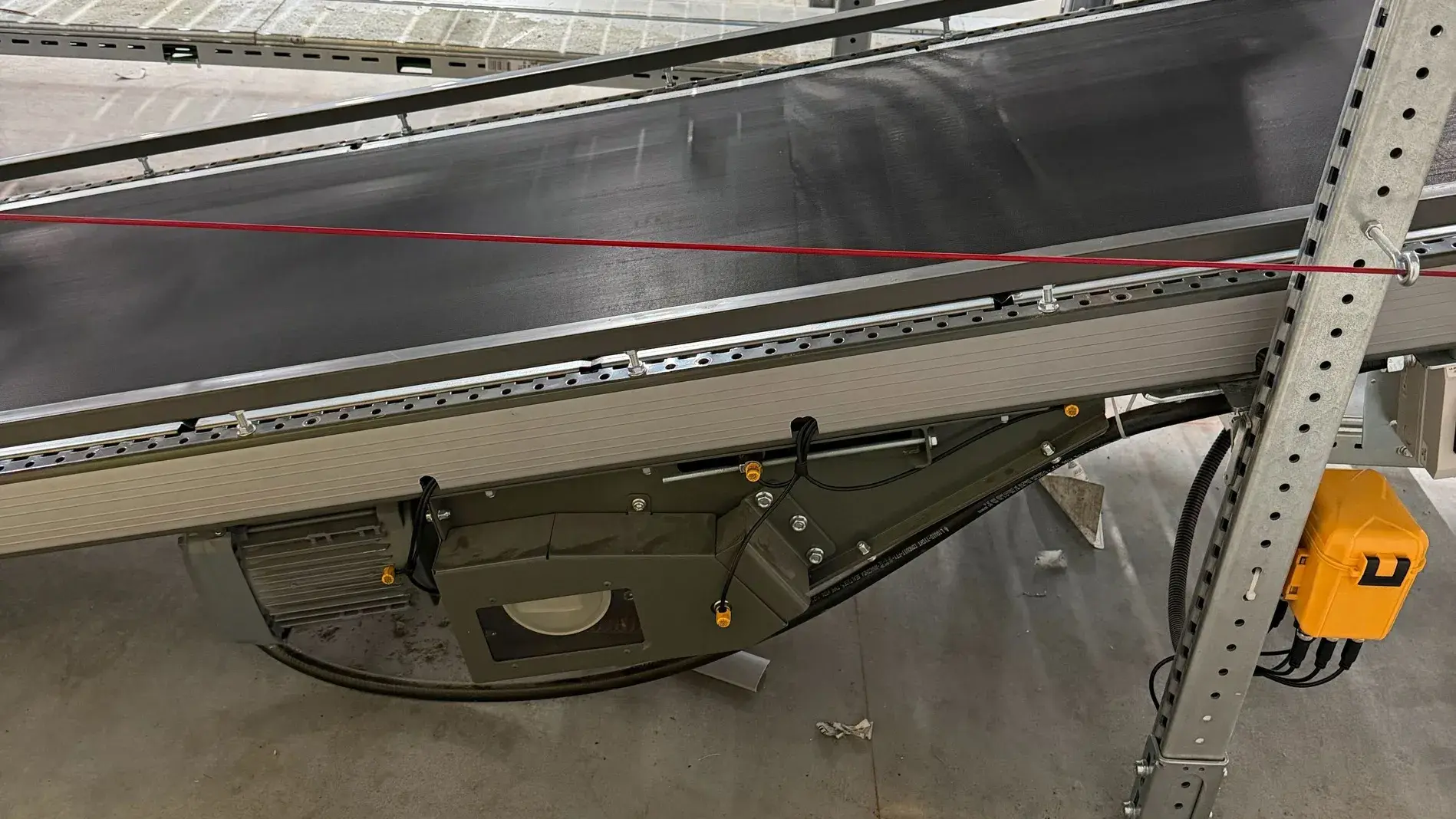
A single misaligned roller on a bulk conveyor transfer line can stop every package behind it. Within minutes, orders miss their cutoff, trucks idle at the dock, and your entire downstream workforce runs out of work. In high-volume fulfillment, logistics, and distribution environments, conveyance is the circulatory system. When these systems stop, everything on that line stops.
For operations, maintenance, and reliability leaders running dense conveyor networks across warehouses, cold storage facilities, and parcel hubs, the challenge is straightforward: you can't afford to find problems after they've already shut down a line. Waites gives your team the early warning signals and prescriptive guidance to act before a developing issue becomes a full facility stoppage.
Below, we break down how undetected conveyance failures cascade into operational losses, what early detection looks like on the plant floor, and how to protect throughput, labor efficiency, and customer commitments with condition monitoring built for these hard-to-reach environments.
Key Takeaways: Why You Need Continuous MHE & Conveyor Monitoring
- A single conveyor failure can idle dozens of downstream workers and delay every order in the queue.
- Early temperature and vibration signals can surface developing problems days or weeks before a line goes down.
- Waites combines wireless sensors, enterprise-scale AI, and analyst-reviewed guidance to protect conveyance uptime in dense facilities.
- Proactive MHE condition monitoring lowers total cost of ownership by reducing emergency repairs, overtime labor, and missed service level agreements (SLAs).
How Does One Conveyor Failure Cascade Through a Distribution Center?
Conveyance systems in fulfillment centers, distribution hubs, and parcel facilities don't operate in isolation.
A pick-to-belt line feeds sorters. Sorters feed packers. Packers feed loaders. When a motor, bearing, or drive trips on one upstream segment, the downstream effect multiplies fast. Pickers run out of totes. Packers run out of product. Loaders stand idle at the dock. Every one of those workers is still on the clock, and the customer commitments tied to that throughput are now at risk.
Keep Reading: Why Predictive Maintenance Fails Without Execution & How to Fix It
In cold storage environments, the problem cascades, potentially becoming even costlier and more catastrophic for communities. A stalled conveyor in a freezer zone means product sits outside of temperature compliance. That's a food safety and regulatory exposure on top of lost throughput.
Why Does Unplanned Downtime Cost More Than the Repair?
While the cost of a replacement bearing or motor swap is known in advance, the cost of the downtime is often not. Greater expenses accrue in the minutes and hours between failure and recovery, when production halts and labor idles.
Third-party logistics (3PL) agreements and internal service-level commitments carry throughput and on-time dispatch targets. Miss the dispatch window because a sorter was down, and the penalty or expedited freight your team absorbs far exceeds the parts cost. Emergency replacement orders carry a price premium over planned purchases, on top of expedited freight.
Then there's labor. When conveyance stops in a facility running hundreds of associates, the idle time cost accumulates fast. Overtime shifts to recover lost output add another layer. Reactive maintenance in conveyance-dependent operations is an operational tax that compounds every time a failure catches your team off guard.
What Do Early Warning Signals Look Like on a Conveyor?
Conveyance failures rarely happen without warning. A misaligned belt produces a distinct vibration signature long before it tracks off and jams.
The challenge in dense conveyor networks is capturing those signals across hundreds or thousands of assets, many of which are elevated, enclosed, or physically difficult to reach. Manual inspection routes can't cover the volume. Walk-around readings with a handheld analyzer might catch a problem on the asset you checked that shift, but they miss the one failing three aisles over.
Continuous conveyor condition monitoring with wireless sensors closes this coverage gap.
Sensors mounted on motors, rollers, gearboxes, and drives capture full-spectrum vibration and temperature data around the clock, giving your team visibility without requiring physical access to every asset on every shift.
Protect MHE Uptime in Dense Facilities with Waites Conveyance™
We built Waites Conveyance™ for the large-scale, hard-to-reach environments where conveyance systems operate.
Our vibration and temperature sensors are engineered for harsh conditions including cold storage zones, dusty mezzanines, and high-vibration sortation areas.
With a private wireless mesh network that operates independently of your IT infrastructure, your maintenance team gets full coverage across every conveyor, motor, gearbox, and drive without adding complexity to your network or workload to your IT team.
Waites Conveyance AI models are trained on more than 20 years of conveyance condition data, and it adds more than 2 trillion conveyor readings a year. The models not only flag a temperature spike, but also recognize evolving failure patterns across your specific equipment types and operating conditions, often months before a technician would notice a change on a manual route.
Analyst-Reviewed Guidance That Tells Your Team What to Fix and When
AI detects the pattern. Our people confirm what it means and what to do about it.
Before any alert reaches your maintenance team, it's reviewed by an ISO certified CAT II–IV vibration analyst who validates the finding and delivers clear, plain-language prescriptive guidance. Your team doesn't receive raw charts or vague recommendations but instead gets a specific diagnosis, a priority level, and a clear next step, all in language a maintenance technician can act on.
Proof From the Plant Floor: Catching Conveyor Failures Before They Stop the Line
At a major distribution facility, Waites sensors detected unusual temperature spikes on an end roller of a bulk conveyor transfer line. The temperature climbed rapidly from a normal 75°F to a critical 259°F, indicating friction from a mechanical issue.
Waites analysts identified the root cause: loosened set screws had allowed the roller to shift position, causing it to rub against the conveyor frame. The maintenance team acted on the alert immediately, realigning the roller and replacing the hardware. Temperatures returned to normal within hours.
The outcome: $200,000 in cost savings, 2 hours of downtime avoided, and a resolution confirmed within 8 days of the initial alert. Without continuous monitoring, that roller would have seized and taken the entire transfer line offline during peak operations.
How Conveyor Condition Monitoring Lowers Total Cost of Ownership
Protecting throughput is the most visible benefit. Lowering total cost of ownership is the one that compounds over time.
When your maintenance team can plan repairs during planned windows instead of reacting during a mid-shift failure, the costs shift dramatically.
-
Parts are ordered at standard pricing.
-
Labor is scheduled at regular rates.
-
The line makes cut-off, so service commitments hold.
Extended asset life is another long-run gain. A misalignment or lubrication problem caught early is a small fix. Left alone, it takes the bearing, then the motor or gearbox with it. Across a few hundred conveyance assets, that means fewer capital replacements.
Over three years, logistics and distribution customers recorded $7.32 in savings for every $1 spent on Waites Conveyance™. The figure is directional and comes from customer-submitted completion reports.
See what unplanned downtime costs your line →
Why Conveyance Environments Need a Purpose-Built Monitoring Partner
Dense conveyor networks span thousands of linear feet. Assets are stacked vertically, enclosed in mezzanines, or operating in temperature extremes. Access is limited, inspections take time, and a single failure can disrupt everything downstream. Manual routes leave too much unseen between inspections.
Waites Conveyance™ brings continuous monitoring to these hard-to-reach environments, backed by experience deploying more than half a million sensors across 900+ facilities on six continents. Our certified analysts work alongside your maintenance and reliability teams to identify developing issues, prioritize risks, and deliver clear repair guidance before equipment problems interrupt throughput.
That partnership continues long after installation. With a shared stake in your uptime, we help your team turn earlier warning into planned action. More than 99% of customers who start with us stay with us.
Protect Your Conveyance, Protect Your Operation
In an always-on world, high-volume warehouses, fulfillment centers, and distribution operations run on the reliability of conveyor systems. When they stop, customer commitments, throughput targets, labor efficiency, and maintenance budgets all take the hit.
The path forward is not to rely on more manual inspections or bigger spare parts budgets but to consider the value of continuous visibility into the health of every motor, bearing, roller, and drive in your facility. A condition monitoring solution backed by AI recognizes failure patterns and is verified by expert analysts who tell your team exactly what to fix and when.
We built Waites for the dense, hard-to-reach environments where your most critical conveyance assets operate, delivering clarity before failure so your operation never stops.
Ready to see where continuous monitoring could make the biggest difference in your operation?
FAQs About Conveyor Condition Monitoring
What is conveyor condition monitoring?
Conveyor condition monitoring tracks vibration and temperature on conveyor components such as motors, bearings, rollers, gearboxes, and drives to find developing problems before they cause unplanned downtime. It applies across material handling equipment in warehouses, fulfillment centers, cold storage, and parcel hubs. Waites Conveyance™ pairs sensors with software and certified analyst review to detect developing problems before they cause unplanned downtime.
How does conveyance downtime affect fulfillment operations?
A single conveyor failure can back up orders, idle downstream workers, delay shipments, and put service commitments at risk. In cold storage, a stalled conveyor can also create temperature compliance and food safety exposure.
Can wireless sensors work in cold storage and harsh warehouse environments?
Waites sensors are engineered for extreme environments, including cold storage zones rated –40°F to 221°F with IP66 to IP68 protection. They report over a private wireless mesh network, not facility Wi-Fi.
How early can Waites detect a conveyor problem?
Waites AI models, trained on 2T+ annual sensor conveyor readings, can identify evolving failure patterns weeks or even months before a component fails. Every alert is then reviewed by a CAT-certified analyst before it reaches your team, so maintenance gets a confirmed diagnosis rather than a raw data flag.
What makes Waites different from other conveyor monitoring systems?
Waites combines enterprise-scale sensor coverage built for dense environments, AI trained on trillions of real-world data points, and certified human analysts who review every alert and deliver prescriptive guidance. Your team gets more than alerts. They get action.