Modernizing Packaging Mill Reliability: A Conversation with Domtar on Building a World-Class Predictive Maintenance Program
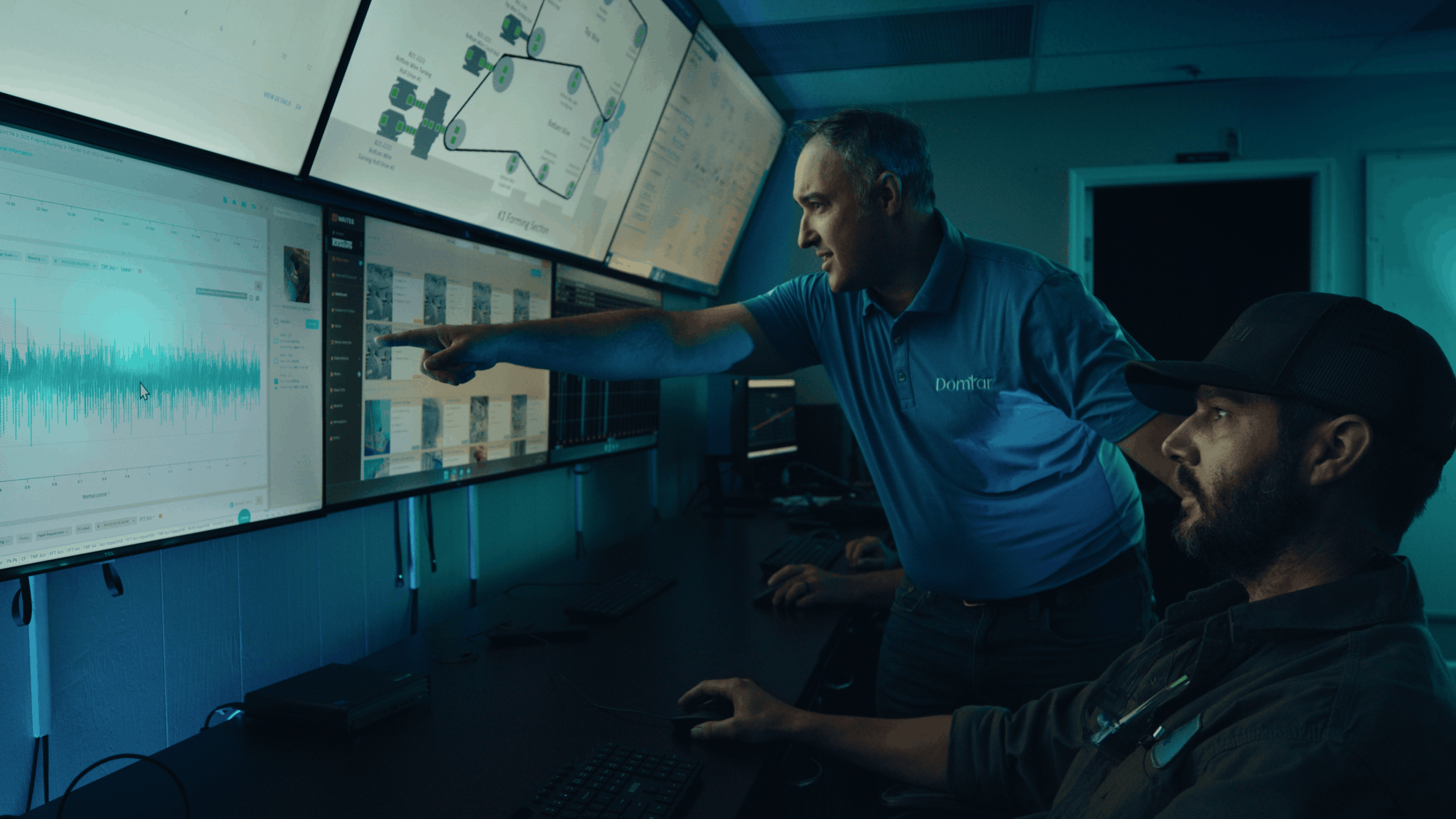
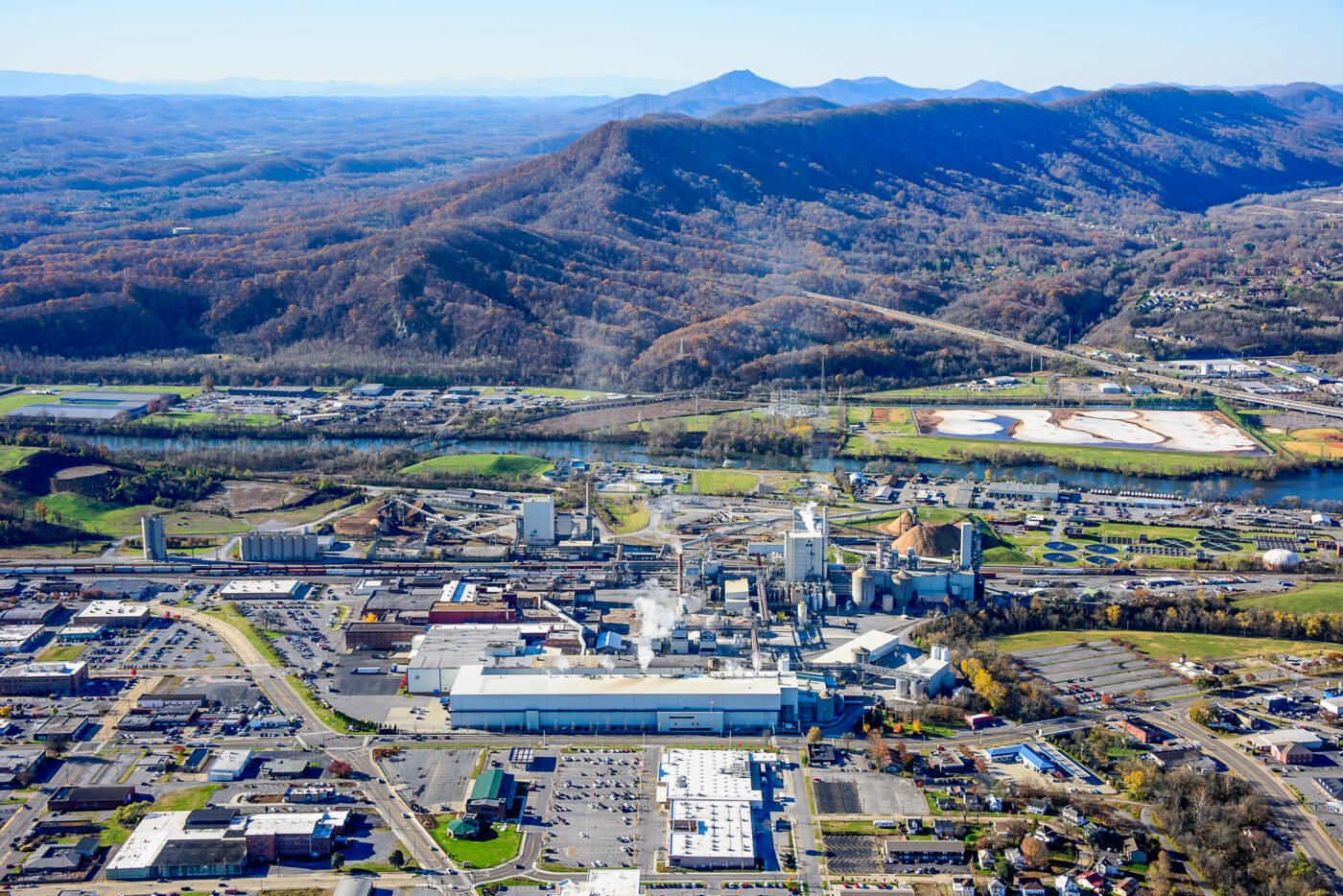
A legacy pulp and paper mill in the southern United States, Domtar’s Kingsport, Tennessee, facility has transformed into a modern containerboard manufacturing and recycling operation. Go inside the mill today and you’ll find advanced technologies, including industrial IoT sensors built for demanding conditions, and a wireless solution powered by a combination of AI and vibration analysis to catch anomalies early and prevent unexpected machine failure.
Since implementing Waites’ condition monitoring solution, Domtar’s Kingsport Mill has significantly reduced mechanical and electrical downtime. With sensors installed providing equipment health data that is verified by ISO certified CAT II-IV vibration analysts, Domtar has avoided a substantial amount of unplanned downtime.
Domtar’s partnership with Waites has deepened over the years as collaboration has turned into an intentional practice. We sat down with Domtar Reliability Leader Matthew McLaughlin, CRE, and Waites Co-Founder and CEO Rob Ratterman to understand how predictive maintenance is revolutionizing modern mill operations.
Rob, let’s start from the beginning of Waites’ journey, from wireless sensors to enterprise IoT solution. What did you misunderstand at first and how did those learnings shape collaborations like Domtar’s?
 Rob Ratterman: I want to start with a confession that I’m a little embarrassed about. When I first saw this problem affecting industrial facilities — the persistent issue of unplanned downtime — I thought it was just another traditional Big Data problem we could easily solve. Bring in billions of data points, process them, find the patterns, then tell people what to fix. It turns out that my technologist’s mind was misled on that. Within the realm of predictive maintenance, it really comes down to that last mile.
When a global e-commerce customer came to us for conveyance monitoring applying our AI and predictive maintenance solution, we understood that bridging AI with the humans on the front line was the magic piece that really made all the difference. That’s how we started taking the solution out to places like Domtar, where they are using our solution to the ultimate degree, and where we’re talking to their maintenance personnel on a daily basis, finding those invisible impacts that could lead to an issue and working through them together.
The solution obviously has a large AI component. Our AI processes billions of readings every day from sensors around the world. AI is important, but the thing that I missed the first several years I ran this business was how absolutely critical the relationship is between our remote analysts, who hand analyze and curate all the findings of the AI, and our customers’ onsite maintenance personnel. It’s about making sure those folks, who are already universally overworked and understaffed, are not encumbered by false alarms and needless noise, and making sure less experienced team members have the remote assistance they need.
Now we’re upscaling our customers’ maintenance teams every day through constant and real-time collaboration. The partnership with Domtar is a great example of this. Their hardworking and dedicated team is empowered by analysts who help them verify the AI findings and who also understand their facility well enough to turn a data pattern into an action item. Going the last mile has helped Kingsport significantly reduce downtime, with remarkable results that are notable in the pulp and paper industry.
I want to be clear: our AI does solve a lot of these problems, but we keep the human in the loop for a reason, and that’s because someone who knows your facility, knows your people, and knows your challenges will be there when teams need those extra insights and a deeper dive.
Matthew, what was your background before Domtar, and what surprised you when you got there?
 Matthew McLaughlin: I have a degree in mechanical engineering and found my way into predictive maintenance and analytics. My background was very much data-driven based on the human experience. An analyst like me early on in my career would have reviewed data manually, literally going through every single time waveform, every single FFT, and spend as much time as it took to either say this piece of equipment is good or to see if something bad might be happening. That was roughly 15 years before wireless sensors entered the picture. In my experience, the human element remained essential to accurate prediction and analysis. But the value was still in the human element.
I arrived at Kingsport during its brownfield conversion into a modern packaging mill operation. That conversion also reshaped staffing. What had been a reliability structure built around a larger workforce gave way to a leaner model with fewer people responsible for reliability sitewide. Domtar brought in Waites early in that planning process because wireless condition monitoring offered a way to support reliability sitewide. The site already had sensors installed but was not using the Waites Solution to its fullest potential.
After a motor failure, I was asked to personally review every data point behind it. But I quickly found that I couldn’t. At the time there were a large number of sensors, and a person cannot in a single day look at one day’s worth of data that is produced. It might take months for me to analyze all the data we were getting in one day. That was the moment I saw an opportunity to realize more of the Waites AI condition monitoring system. And that’s when I started viewing it as a partnership, with a learning and teaching element.
What changed and when did collaboration become the strategy?
McLaughlin: I pushed for our team to treat the relationship with Waites as a genuine partnership, bolstered by the back and forth. That translated into weekly check-in calls replacing our monthly ones and opening lines of communication directly to Waites analysts. Nothing changed until we started actively partnering with Waites. That led to where we are now, with a feedback loop that helps the mill operate more smoothly, more efficiently, and more reliably.
“Through a challenging time in the mill’s startup cycle, I could rely on our partnership with Waites. And that helped me sleep at night.” – Matthew McLaughlin, Reliability Leader, Domtar
Ratterman: Waites’ lead analyst for Domtar, Josiah Carter, described that shift as changing the pace of the relationship almost overnight as well. Carter would field texts from Domtar’s maintenance team the moment someone on the floor noticed something off, such as a motor running hot or an unusual vibration. In this kind of collaboration, our team often responds within minutes with next steps, a much faster loop than the mill’s earlier monthly reporting cycle or in more traditional workflows.
Josiah Carter, Lead Vibration Analyst, Waites
What does the day-to-day workflow look like at Kingsport now?
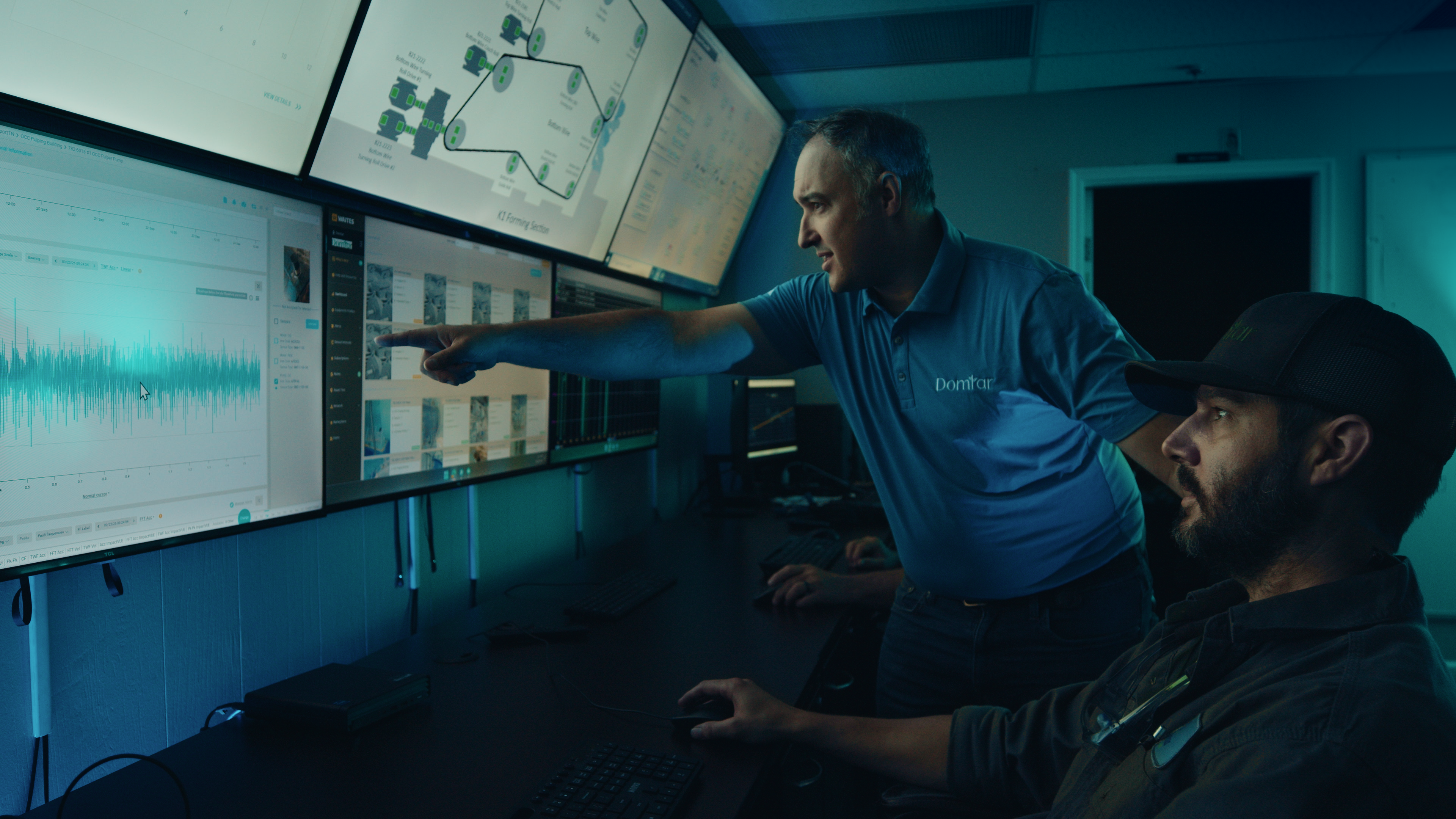
McLaughlin: Our Domtar team operates out of a dedicated space that we call the Reliability War Room. Inside there’s a dashboard screen, and in front of that are technician stations, one for vibration and one for ultrasonic and lubrication work. On Monday mornings, we’ll run through open action items. The mill’s process control system is connected to the Waites platform, so vibration anomalies are checked against flow rates, consistency levels, and temperatures. Every interaction is a collaborative exchange, with both sides accountable for the outcome and both sides tracking toward success.
Walk us through what vibration analysis actually measures and what is at stake.
Ratterman: You have a vibration sensor measuring vibration, which is just the movement of the machine, from subsonic levels to ultrasonic levels. A crack in a bearing, for instance, creates a small bump in the pattern. Waites’ sensors sample at very high frequency. Bearing wear, motor misalignment, and lubrication breakdown each produce a distinct signature the AI is trained to recognize.
Finding the pattern is only step one. Some issues are six months out and only urgent because a replacement part takes months to ship; others are two-hour, twenty-dollar fixes. The ISO-certified analyst on our side becomes that human in the loop that analyzes the findings of that AI and decides whether it is an issue that the facility needs to know about immediately, and if it is, they issue that action item.
McLaughlin: The sensors are permanently in place, which allows us to sit in the Reliability War Room, perform our own analysis using Waites’ prescriptive recommendations, and understand through these collaborative interactions the action we need to take, so that in a matter of hours we are able to act. This is really important because we’re a just-in-time manufacturer, so it’s critical for us, for the supply chain, that equipment reliability is high to make sure our customers get their products on time.

Can you give a concrete example of the system catching something a standard approach might have missed?
McLaughlin: Two examples from Kingsport stand out. On the mill’s short fiber HD chest pump, Waites flagged elevated vibration, and the on-site technician found signs of cavitation, but nothing obviously wrong with the pump. A traditional response would likely have meant scheduling a bearing change or pulling the pump. Instead, the team cross-referenced the vibration signature against process data and found the real cause: dilution water was off, pushing the pump outside its optimal consistency window and creating the cavitation the sensors had picked up. The fix required no maintenance work at all, just adjusting the dilution water. Vibration on the asset dropped significantly, and bearings that could have degraded under prolonged cavitation were preserved.
The second involved a vacuum pump train, where Waites picked up a signature that matched a textbook bearing defect, except that the frequencies didn’t line up with the bearing number on file. Rather than force the data to fit the expected diagnosis, analysts flagged the mismatch and pushed the question back to the site. One of our technicians eventually traced the discrepancy to the pump manufacturer’s own spec sheet, which listed bearing data that did not match the installed equipment, and that data had carried into the bill of materials. It’s fixed at the source now, so every future diagnosis on that asset starts from accurate specifications.
How has the cultural shift affected the way the rest of the mill operates, beyond the reliability team?
McLaughlin: Reliability has become a plant-wide responsibility rather than one department’s job. By the time I get to my desk, issues are already identified and prioritized in the queue.
We’ve since expanded our sensor count and continue to improve purposefully through a disciplined approach. We want to move through open action items and resolve issues quickly. That kind of operating model is efficient for the entire mill.
What's next, both for Kingsport and for the technology itself?
McLaughlin: It’s a personal goal to turn Kingsport into a model for other Domtar sites as well as other pulp and paper manufacturers to follow. Sites need a communication cadence that keeps both teams aligned, a site champion, and certified analysts willing to invest time in the system before it fully pays off. I can’t stress enough that it’s really the integration of the team winning together, working to sustain operational reliability with proactive strategies. One person is not going to do it by themselves.
We’re making these improvements to get the last bit of life out of everything that we can, and we wouldn’t be able to do that without the AI-driven computing power. Not to say that we’re not intelligent individuals; it’s just that we can make a lot of iterations faster using the AI with this feedback loop. Culturally, I think there is an inherent fear that AI might take something away from workers. My team looks at it like a tool. It helps us react faster.
Ratterman: Waites has recently started applying large language models to the running record of conversations between on-site maintenance staff and its analysts. In early pilots at other facilities, the approach has surfaced patterns humans might not think to look for, such as a specific shift needing lubrication training based on recurring issues in their reports.
As for how the technology and our solution is evolving, I’m going to sum up by saying, similar to what Matt said earlier, that we want our customers to be able to sleep through the night, not worrying while Waites’ AI and analysts keep watch.
No one should be afraid of a good night’s sleep.
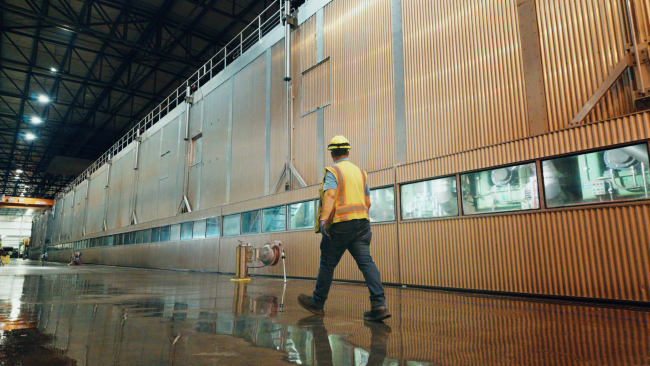
Reliability That’s Collaborative by Design
Workflows like what Domtar and Waites have created together are collaborative by design. With analysts working alongside Domtar, a unified team of reliability engineers, lubrication specialists, vibration technicians, operators, and maintenance personnel can move from detection to repair quickly and with greater confidence.
Does your facility have a culture that’s evolving from reactive firefighting to a predictive monitoring and prescriptive maintenance approach? Unlock the value of 24/7 analyst coverage and advanced AI for continuous coverage.
Disclaimer: Statements in this Q&A reflect the individual views and experiences of the participants and are not guarantees of future performance. Results described are specific to Domtar’s Kingsport facility and may vary by site, equipment, and operating conditions. Domtar and Waites are independent companies; nothing herein constitutes an endorsement or warranty by either party.