Conveyor Vibration Monitoring: A Predictive Maintenance Guide to Preventing Multi-Million Dollar Bottlenecks
What is Conveyor Vibration Monitoring?
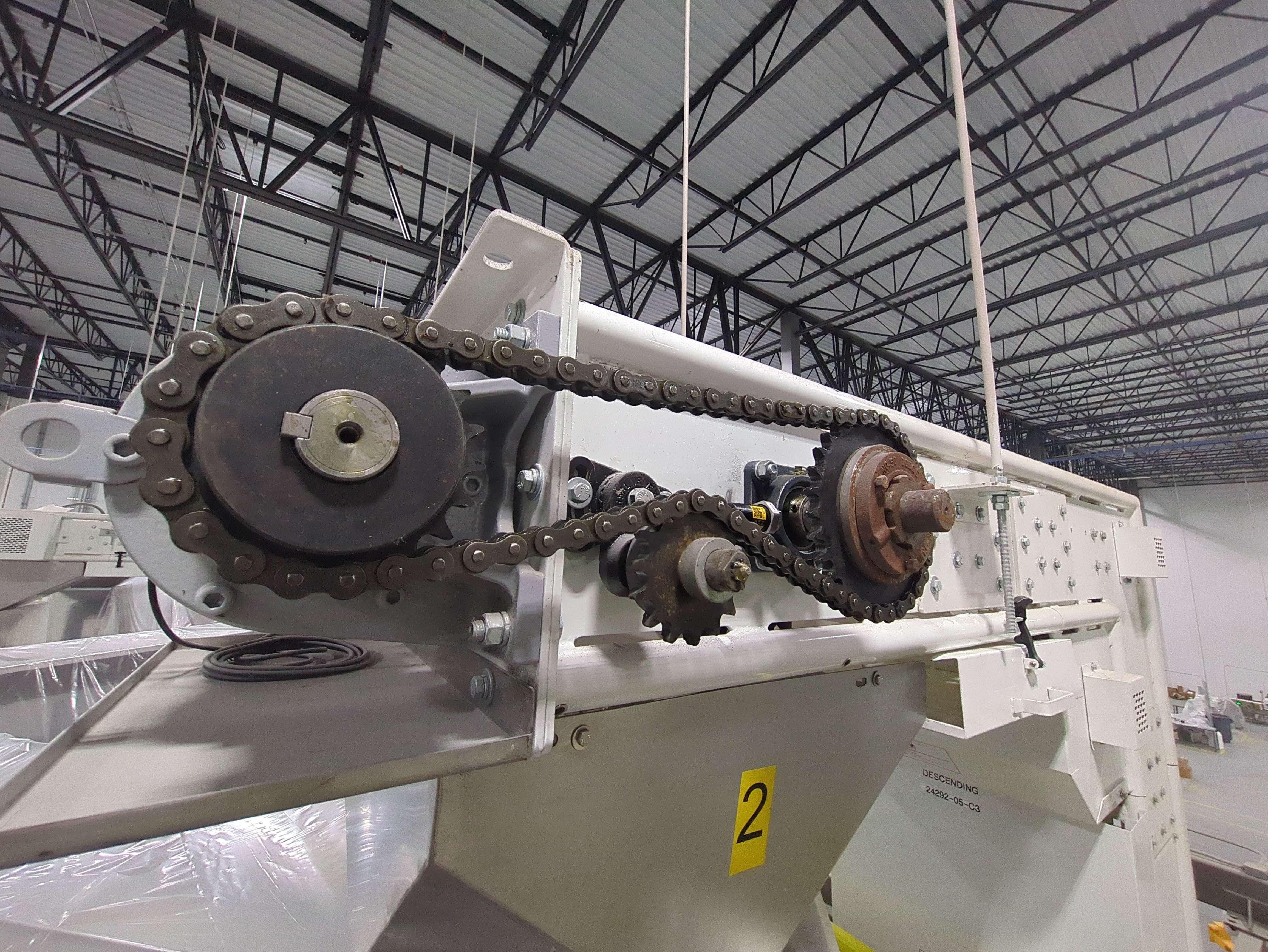
Predictive maintenance of conveyor systems uses condition monitoring sensors mounted on motors, gearboxes, pulleys, and idler bearings to track vibration levels over time. When readings rise above a component’s normal baseline, maintenance teams can diagnose the developing fault and schedule a repair before it causes unplanned downtime.
Conveyor vibration monitoring puts wireless sensors on motors, gearboxes, pulleys, and idler bearings to catch faults while they’re still developing, often weeks or months before anything breaks. It’s the foundation of predictive maintenance of conveyor systems. When one stalled conveyor can idle an entire line, that early warning is what turns a costly bottleneck into a planned repair.
Protecting Distribution Center Uptime
Late on a Tuesday night, a Waites analyst notices something on her dashboard for a high-volume distribution center. The drive-end bearing on the main conveyor’s head pulley shows a slow rise in high-frequency vibration. Nothing seems wrong on the floor. The belt is running, cartons are moving, and the bearing housing is barely warm to the touch. But the trend line has been climbing for nine days. She creates an action item to alert the reliability technician.
When Waites’ AI flags a trend, an analyst inspects it to confirm the issue, so the technician can order the part and schedule work to repair ahead of any breakdown. When the maintenance crew pulls the old bearing in this case, the outer race is already pitted. Left alone, it probably would have seized within a few weeks, and in a worst-case scenario, at peak volume.
Most conveyor failures give that kind of notice. A worn bearing, a misaligned pulley, or a chipped gear tooth each changes the machine’s vibration signature long before the part seizes.
Many facilities still miss the signal because they measure vibration once a quarter, if at all, instead of monitoring it continuously.
Wireless vibration monitoring sensors on drives, pulleys, and idlers pick up those changes as they develop, which gives the maintenance team time to act. Rather than scrambling to replace a seized pulley mid-shift, they write a work order and schedule the repair during planned downtime.
A routine bearing swap stays routine instead of turning into a multimillion-dollar bottleneck when the conveyor feeding the rest of the operation goes down. Predictive maintenance programs are built to make that shift, and the facilities getting the most out of them share a few common practices.
Why Does One Conveyor Failure Stop an Entire Facility?
Conveyors are the arteries of industrial operations. They carry raw material into the process, move work-in-progress between stations, and deliver finished goods to packaging and shipping. When they run, nobody thinks about them. When they stop, everything does.
That dependence spans nearly every heavy industry.
- Manufacturing. Conveyors pace assembly and packaging lines.
- Mining and aggregates. Conveyors move tons of ore and rock every hour across long, harsh runs.
- Logistics. Distribution center uptime depends on sortation and takeaway conveyors keeping pace with order volume.
- Food and beverage processing. Conveyors link washing, cooking, filling, and packing steps that can’t simply wait.
What makes conveyors uniquely risky is their position in the process. Most are serial: material flows through them, not around them. A single failed drive pulley or idler set can starve every downstream station and back up every upstream one.
One conveyor goes down, and within minutes an entire line or facility is idle.
How Much Does Unplanned Conveyor Downtime Cost?
The repair bill is the smallest part of a conveyor failure. The real cost is everything that stops while the conveyor is down.
- Lost production. Every hour of downtime is output that can’t be recovered without overtime or added shifts.
- Labor inefficiency. Operators, pickers, and line staff stand idle or get pulled into firefighting, while still on the clock.
- Missed SLAs. In distribution and contract manufacturing, late shipments trigger penalties, chargebacks, and damaged customer relationships.
Then there’s the repair itself. An emergency failure means expedited parts, overtime crews, and rushed work that often causes secondary damage. A failed bearing that could have been swapped during a planned stop can take a shaft, pulley, or gearbox with it.
Planned maintenance on the same component typically costs a fraction of the reactive version, because the parts, people, and downtime window are all chosen in advance.
For high-throughput operations, the math adds up fast. At a busy fulfillment and distribution center or food and beverage plant, a few hours of unplanned conveyor downtime can easily run into the millions once lost throughput, idle labor, and penalties are counted.
Common Conveyor Failures (and Why They’re Hard to Catch Early)
Most conveyor breakdowns trace back to a handful of mechanical failure modes, and nearly all of them develop gradually.
| Failure Mode | What Happens |
| Bearing Wear | Pulley, idler, and drive bearings degrade under load, contamination, and poor lubrication. Early-stage defects produce faint, high-frequency vibration long before heat or noise appear. |
| Misalignment | Shafts, couplings, and pulleys that drift out of alignment add stress to bearings and seals and accelerate wear across the drive train. |
| Belt Issues | Mistracking, uneven tension, and splice problems cause edge damage, spillage, and added load on rollers. Belt tracking sensors catch a belt that has already wandered; vibration data helps reveal the roller and pulley faults that push it off course. |
| Motor and Gearbox Degradation | Gear tooth wear, looseness, imbalance, and electrical faults in drive motors build slowly until the drive can no longer carry the load. |
Traditional inspections struggle with all four. Walk-down checks and monthly route-based readings capture a single moment, often while equipment is running under ideal conditions. Many conveyors are long, elevated, or hard to reach safely, so they get inspected less than they should.
By the time a fault is loud, hot, or visible, it’s usually well past the point where a cheap, planned fix was possible.
Detecting Conveyor Faults with Vibration Monitoring
Every rotating component has a vibration signature. When that signature changes, something mechanical has changed with it. Vibration analysis reads those changes and connects them to specific faults:
| Fault | Vibration Signature |
| Imbalance | Shows up at running speed |
| Looseness | Creates harmonics |
| Misalignment | Adds axial and twice-running-speed energy |
| Bearing and Gear Wear | Generates distinct high-frequency patterns |
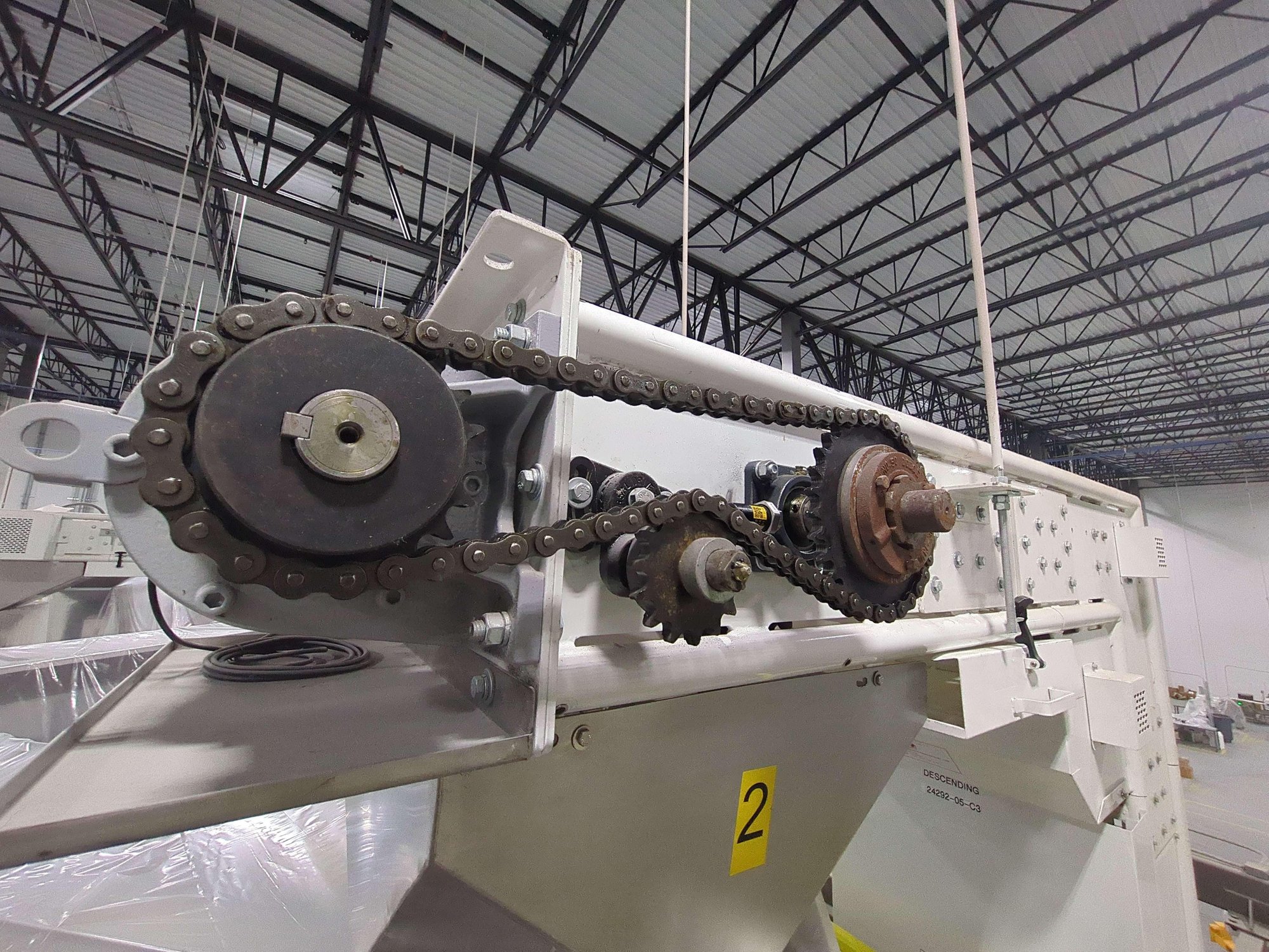
The difference between a useful program and a box-checking exercise is how often that data is collected. Manual route-based checks with a handheld analyzer might capture a reading once a month. Wireless vibration sensors mounted directly on motors, gearboxes, and pulley bearings collect data continuously, around the clock, on every shift.
That continuity unlocks trend-based insight. A single reading tells you how a machine looks today. A trend shows how it’s changing: whether a bearing is stable, slowly degrading, or accelerating toward failure. That trajectory is what lets maintenance teams act with confidence instead of guessing.
How Early Can Vibration Monitoring Detect Conveyor Failure?
Continuous vibration monitoring typically flags developing faults weeks or even months before failure.
That lead time changes how maintenance gets done. Instead of reacting to a breakdown at 2 a.m., teams can order parts, line up labor, and schedule the repair during a planned shutdown or low-volume window. Work moves from the emergency column to the backlog, where it belongs.
Early detection also protects against single-point-of-failure scenarios. Most facilities have a few conveyors with no redundancy: the main incline at a mine, the primary sortation loop at a fulfillment center, the transfer line feeding a filler. Those assets deserve the closest watch, because when they fail, there is no workaround.
Monitoring them continuously is one of the highest-return investments in material handling reliability.
What to Look for in a Vibration Monitoring Solution
Not every monitoring system is built for the realities of conveyor environments. The right solution should check four boxes.
| Requirement | Why It Matters |
| 1. Easy, non-invasive installation | Wireless sensors that mount in minutes, without running cable or shutting down the line, make it practical to cover long conveyor runs and hard-to-reach drives. |
| 2. Continuous data collection | Readings should flow automatically, every day, so trends are built from real operating data rather than occasional snapshots. |
| 3. AI-driven insights, not just raw data | Maintenance teams don’t need more waveforms to interpret. They need clear alerts that name the likely fault, its severity, and what to do next. |
| 4. Scalability | A solution should grow from one critical conveyor to every conveyor system across multiple sites, with a single view of asset health. |
This is where Waites stands apart.
Waites Conveyance™ condition monitoring technology comprises wireless and tethered vibration sensors that install in minutes and connect through cellular gateways, so there’s no dependence on plant Wi-Fi or IT infrastructure.
AI-powered analytics flag anomalies automatically, and certified analysts review the data and provide actionable diagnoses, giving your team expert backup without adding headcount. From a single drive to an enterprise-wide fleet of conveyors, the platform scales with your operation.
What are the Benefits of Predictive Maintenance for Conveyor Systems?
Predictive maintenance of conveyor belts pays off well beyond the maintenance shop.
- Increased Uptime: Catching faults early keeps lines running and protects throughput during peak demand.
- Reduced Maintenance Costs: Planned repairs replace emergency ones, cutting overtime, expedited freight, and secondary damage.
- Improved Operational Reliability: Consistent conveyor performance means fewer surprises for production, shipping, and customers.
- Better Resource Planning: With clear visibility into asset health, plant managers can schedule labor, stock spare parts, and plan capital spending based on data instead of guesswork.
Conveyors will always be the arteries of your operation. The question is whether you find out about a problem from a sensor alert weeks ahead or from a stalled line. With Waites, you get continuous monitoring, AI-driven diagnostics, and expert support that turn conveyor health into a competitive advantage.
Download additional resource: The Complete Uptime Guide for Conveyance Systems
FAQ: Conveyor Vibration Monitoring
Vibration monitoring vs. belt tracking sensors: what’s the difference?
Belt tracking sensors tell you a belt has already wandered off course. Vibration monitoring tells you why it’s happening, and it covers the whole conveyor system, not just the belt. Sensors on motors, gearboxes, pulleys, and idler bearings catch the developing faults that push a belt out of line, like a worn bearing or a misaligned pulley, often weeks before anything breaks. Most facilities get the most protection by using both.
How do you monitor conveyor idler bearings?
Mount vibration sensors on the bearing housings and track the readings over time. A bearing in the early stages of wear gives off faint, high-frequency vibration long before it gets hot or noisy, so a continuous trend shows a problem that a walk-down inspection would miss. Start with idlers and pulleys on conveyors with no redundancy. A seized idler bearing stops the roll from turning, which drags against the belt, accelerates belt wear and heat buildup, and can force an unplanned shutdown of the entire line.
How often should conveyor vibration be measured?
All the time. Monthly or quarterly route-based checks only capture one moment, often while the equipment is running under ideal conditions. Wireless vibration sensors collect data around the clock on every shift, which builds a trend that shows whether a component is holding steady, slowly wearing, or heading toward failure.
Do wireless vibration sensors need plant Wi-Fi?
Not with Waites. Waites Conveyance™ sensors connect through cellular gateways, so they don’t depend on plant Wi-Fi or IT infrastructure. They install in minutes without running cable or shutting down the line.
Ready to stop conveyor bottlenecks before they start?
Contact Waites to schedule a demo and see how continuous vibration monitoring can protect your uptime.