Waites’ Crystal Ball: Predictions for the Manufacturing Industry

From AI implementation and skilled labor shortages to domestic manufacturing movements and digitalization, 2025 was the year of planning for what’s next. In 2026, manufacturers will look to move forward with plans and fulfill promises to lean into smart, data-driven models. As the new year unfolds, operators will mature their digital ecosystems, embrace proactive improvement, and lean into smart manufacturing.
But what will that look like in practice? Waites’ experts share their predictions for how 2026 may shape up. Read on to learn more.

The year AI becomes a reality
AI comes of age
 “2025 was the year manufacturing organizations realized, ‘Wow. We really do need AI.’ However, their objectives were too broad to deliver impact. 2026 will be the year where manufacturers home in on implementing the simplest, yet highest impact, AI tools to unlock real value.
In years past, manufacturers have been content to coast, leaving legacy systems in place while treating AI as an afterthought or a game limited to that latest chatbot versus a competitive advantage. Recently, however, stakeholders have taken a look around and seen that many US factories are outdated and falling behind as competing countries like China surge ahead with the use of AI. So now there is a greater sense of urgency.
But urgency should not mean panic, because that’s exactly what will stop us from enacting real, tangible change. 2026 will be full of headlines about humanoid robots, lights-out factories, and ‘Industry X.0,’ all promising changes that aren't realistic overnight. While many might be tempted to do so, they should focus more on strategic steps rather than radical leaps. What can you realistically put in place today to make your people faster, your operations smoother, and your facility smarter?" - Rob Ratterman, co-founder and CEO
Shut out the hype, look for practical wins, and partner with people who will help your facility build intelligent momentum one step at a time.
Rob Ratterman, co-founder and CEO
AI will continue to be widely introduced in manufacturing, but it won’t replace domain expertise
 “The manufacturing industry spent 2025 grappling with the adoption and implementation of AI. As AI becomes more commonplace in everyday technology, industry leaders are learning how to properly implement it into work processes to improve automation and increase efficiency on factory floors.
In 2026, I predict we’ll see the introduction of more AI processes in everyday work, but it will not replace the human experience that is crucial to the manufacturing industry. While AI can assist in reviewing repetitive data or managing mundane tasks, it won’t replace the expertise that comes as a result of domain expertise and hands-on interactions.” - Eric Ibarra, Chief Technology Officer
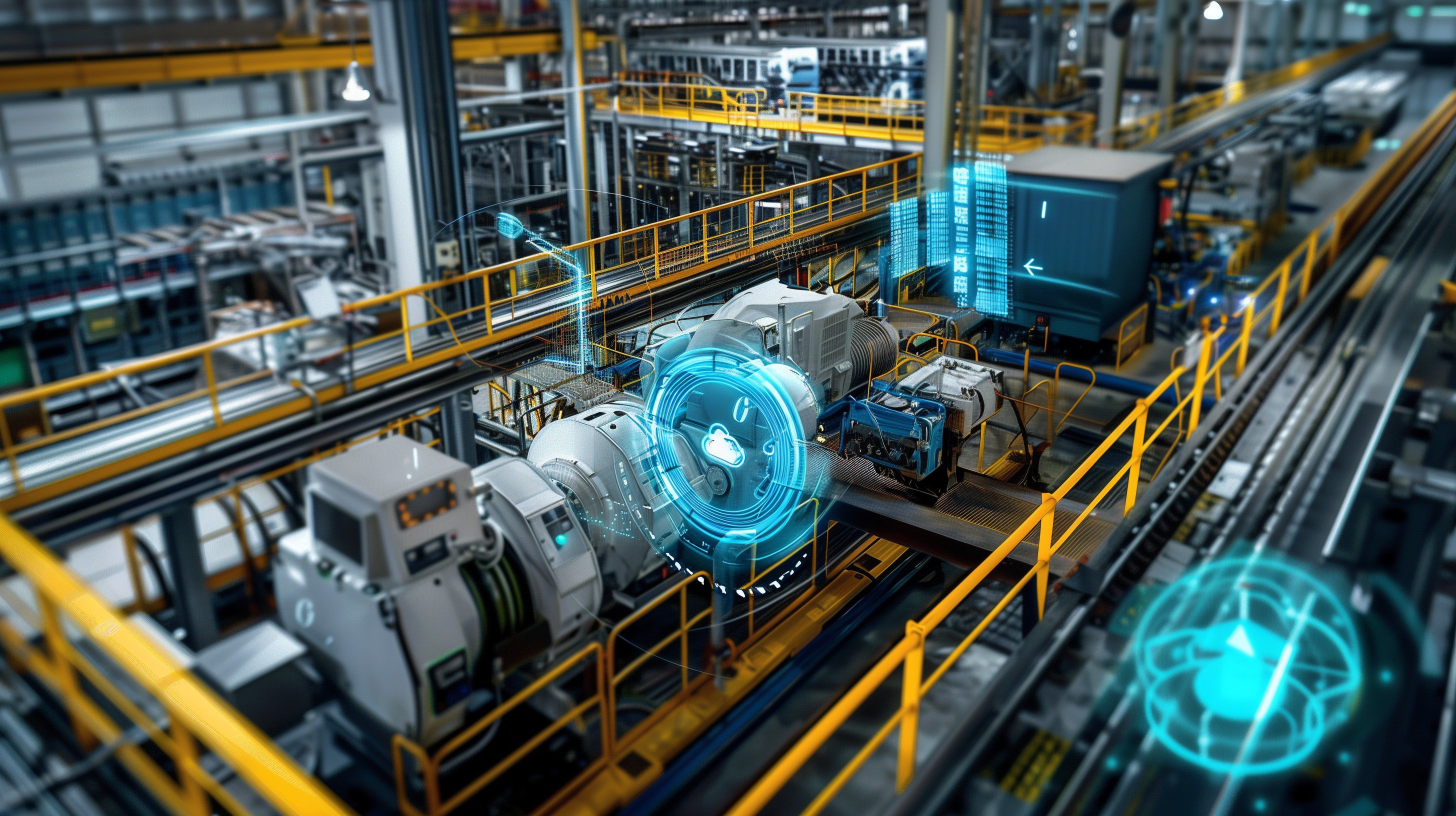
Predictive maintenance will be the first step into smart manufacturing and digitalization across industries
Predictive maintenance will be the first easy step into smart manufacturing
“Predictive maintenance (PdM) has been gaining ground for years, but—as companies feel the urgency to modernize in 2026—it will stand out as the smartest entry point to advanced manufacturing. The technology is maturing fast, with better sensors, broader coverage, and cleaner insights. As that technology continues to advance over the next year, it’s going to create a natural bridge from today’s legacy systems to tomorrow’s cutting-edge factories.
And with that evolution comes something new: the opportunity for “predictive quality,” as I’ve heard many manufacturers say. As sensors become more reliable and AI models get smarter, PdM technology can do more than just spot machine failures; it can also understand the underlying processes behind them.
For example, wouldn’t it be good to know that a pump is struggling because a piece of equipment upstream is pushing too much pressure? That’s just one of the ways we’ll start to see predictive maintenance turn into operational intelligence over the next year, and exactly why it’s so powerful.
Predictive maintenance delivers immediate value, is easy to deploy and maintain when you partner with the right vendor, and makes every other advanced manufacturing solution possible. By keeping your machines running, building confidence with easy wins, and letting data guide you into bigger, more transformative improvements, you’re setting your facility up for success both next year and every year down the line.” - Rob Ratterman, co-founder and CEO
The next manufacturing revolution? Digitizing physical reality
 “2026 will be the manufacturing industry’s year of digital transformation. Most manufacturing companies have spent the last decade digitizing paperwork and administrative work processes, but those efforts, on a large scale, have not yet translated to physical spaces. Companies looking to introduce AI to their work processes will not be able to, or will not receive quality data insights, if their entire ecosystems are not digitized.
Once digitized, predictive maintenance (PdM) will become the nervous system of plants, AI will become the brain of the system, and computerized maintenance management systems (CMMS) will become the scheduling, workflow and way workers complete jobs. This digital transformation of the shop floor is likely to impact the work processes of every industry as organizations learn they must digitize systems to reduce downtime, improve quality and remain competitive.” - Ryan Bowman, Chief Revenue Officer
Predictive maintenance will be crucial to data center development and operations
 “Data centers are one of the unique manufacturing facilities that require 100%, around-the-clock uptime, as shutdowns to data centers can cause catastrophic impacts to industries that rely on their services. To combat this, many organizations are now implementing distributed systems. Distributed systems can increase resiliency at the expense of complexity, efficiency, and cost.
By implementing predictive maintenance technology into data centers, operators can monitor for potential breakdowns across systems, schedule repairs, and automate maintenance before a problem occurs. As data centers continue to develop and distributed AI becomes more commonplace, I predict advanced maintenance strategies in partnership with AI will become a widely used tool to quickly recognize and diagnose maintenance issues in 2026 and beyond.” - Eric Ibarra, Chief Technology Officer

Domestic manufacturing will increase, improve quality
Increased domestic manufacturing within the United States will improve production time and quality
“Today’s geopolitical and economic landscape is driving a manufacturing resurgence within the United States that will ultimately improve production times and product quality. U.S. companies manufacturing their own products—rather than buying them overseas—have more control and must take more care to ensure the products they’re creating meet the quality standards of their customers.
As a result of this, we’ll see modern manufacturing plants being built and legacy plants being modernized to handle the demands of an organization’s entire supply chain. These plants will likely include new technologies that help create products faster and with improved quality. Organizations that manufacture entire products domestically will rapidly enhance their cost-effectiveness, as those organizations won't have to wait for product arrivals or pay shipping costs. Newly built and upgraded manufacturing plants will help address the critical labor shortage as AI is being used in tandem with employees to improve operations.” - Ryan Bowman, Chief Revenue Officer
As the manufacturing industry continues to innovate, don’t get left behind in 2025. Connect with Waites to take the first step in your journey to smart manufacturing today.
