CASE STUDY Gearbox Failure Review: Early Detection Without Timely Intervention
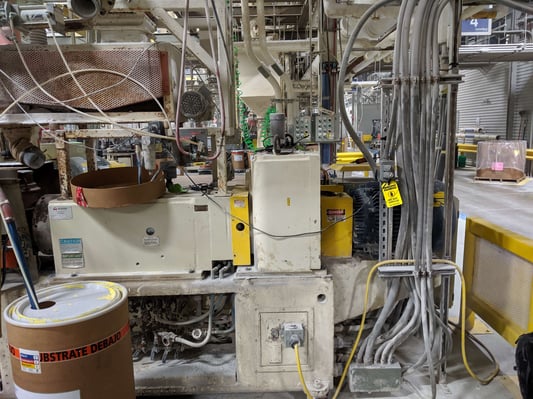
At a North American building materials facility, a critical production gearbox began showing abnormal operating conditions tied to lubricant degradation. Waites identified increasing temperature conditions approximately three months before the functional failure occurred, creating a significant window for intervention.
An oil change was completed following the initial alert, but continued monitoring later identified dropping oil levels and deteriorating seals requiring replacement. Before corrective maintenance could be completed, the gearbox experienced a functional failure that resulted in unplanned downtime and emergency replacement activity.
DETECTION TIMELINE
Initial Alert
Waites identified increasing gearbox temperatures tied to lubricant degradation.
Following the failure, Waites analysts reviewed historical acceleration, velocity, peak-to-peak, temperature, and spectral data to reconstruct the failure progression. While overall vibration amplitudes remained relatively stable for much of the timeline, additional spectral analysis later identified increasing gearmesh activity leading up to failure.
Inspection findings confirmed lubricant loss from a failed oil seal and resulting internal gearbox damage.
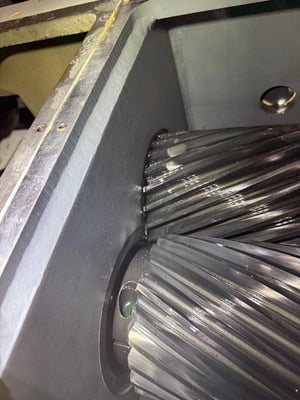
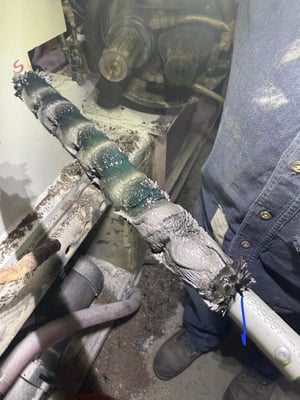
Gearbox inspection findings confirmed lubricant loss and internal mechanical damage following prolonged seal degradation.
The monitoring system performed exactly as intended, providing approximately three months of advance warning before the failure occurred.
The event reinforced an important reliability principle: predictive maintenance only creates value when early detection is paired with timely maintenance action. Facilities that operationalize condition monitoring can transform unexpected failures into planned maintenance events instead of reactive downtime.